Arriving by air
The airports serving Edinburgh and its region:
- Edinburgh Airport EDI
Connections, terminals and transfer arrangements change — confirm them with the airline and the organiser rather than planning around a fixed transfer time.
All events & mapCyclingTour de France
Sport · Event guide
The 2027 Tour de France is scheduled for 2–25 July. Its published 21-stage route begins in Edinburgh; check the stage-by-stage route and local access notices rather than relying on the map marker as a full-course plan.
01 · Event details
Timing: 2–25 July 2027 · 21-stage route published; starts in Edinburgh
Venue or host area: A moving 21-stage race across the United Kingdom and France. The official route confirms Edinburgh as the Grand Départ; the category-map marker identifies that start, not the entire course.
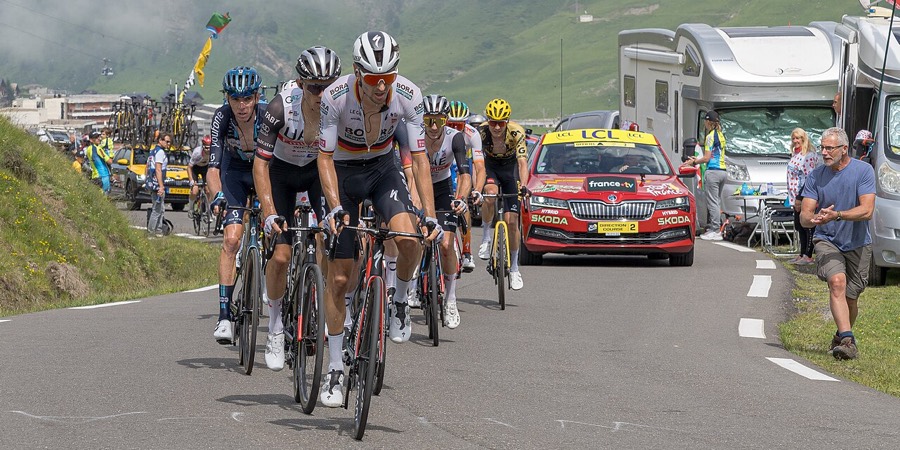
Access: The organiser describes following the race live from the roadside. The 2027 route publication is not a stage-day closure or spectator-zone plan: check host-city notices for road closures, parking, public transport and any controlled viewing areas. Do not assume event roads remain open to vehicles.
02 · Plan the visit
Choose a stage and host town before selecting a base. The official route page gives stage locations, while the organiser’s roadside-following page is general guidance rather than a 2027 road-closure schedule. Check the relevant stage page, local authority, rail operator and road-closure notices for current arrival and viewing rules; do not use the route map as a transfer plan.
03 · Location
Scotland's capital stacks a medieval old town and a Georgian new town either side of a valley, both walkable and both steep in places.

The airports serving Edinburgh and its region:
Connections, terminals and transfer arrangements change — confirm them with the airline and the organiser rather than planning around a fixed transfer time.
A moving 21-stage race across the United Kingdom and France. The official route confirms Edinburgh as the Grand Départ; the category-map marker identifies that start, not the entire course.
The catalogue marker shows Edinburgh, United Kingdom · 2027 Grand Départ at city or region level only — it is not an entrance, a gate, a course or a transfer route. For the event’s position among its category peers, open the Cycling overview and map.
04 · Overview
A three-week stage race across France and its neighbours: 21 stages over 23 days, around 3,500 km, 176 riders in 22 teams, with two rest days and a finish on the Champs-Élysées. The 2027 edition starts in Edinburgh before the race returns to France, and the route mixes flat sprint stages, a time trial, and mountain stages in the Alps and Pyrenees where the general classification is decided.
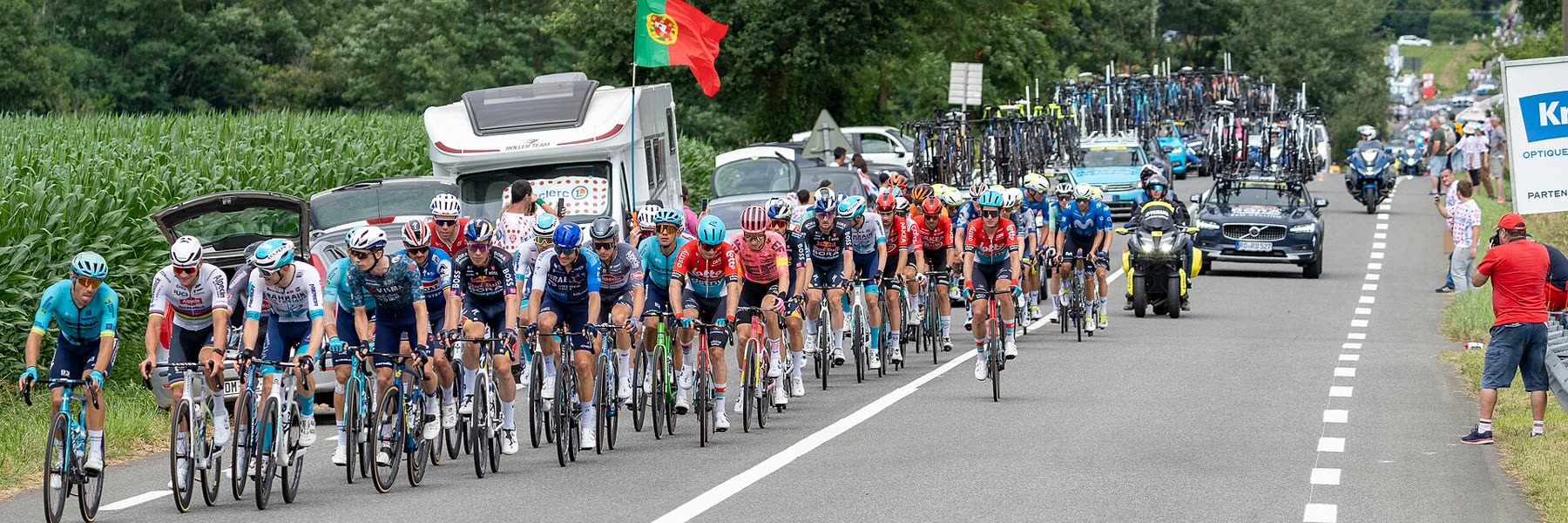
The Tour is the biggest annual sporting event in the world by roadside audience — millions of people stand on the route over three weeks, and a stage finish in a small town temporarily triples its population. It is also free to watch: the race passes through public roads, and the caravan of sponsor vehicles that precedes it is part of the spectacle. The yellow jersey is the most recognised piece of clothing in cycling, and simply wearing it for a day is a career milestone.
The first Tour de France ran in 1903, created by the newspaper L'Auto to sell copies and won by Maurice Garin over six long stages. The mountains were added in 1910, the yellow jersey in 1919, and the modern three-week shape with 21 stages settled in the 1930s. It has been held every year since except the two world wars, and the race has started outside France regularly since the 1950s — the 2027 Grand Départ in Edinburgh is its first in Scotland.
| First held | 1903 |
|---|---|
| Format | 21 stages, 23 days, two rest days |
| 2027 Grand Départ | Edinburgh, 2–25 July |
| Field | 176 riders, 22 teams |
| Organiser | Amaury Sport Organisation |
05 · Research & credits
Evidence and event information reviewed 2026-10-31. Published edition facts are separated from typical timing and historical context.
No affiliate links. This guide is for travel planning, not a guarantee of entry or event conditions.
Related guides