Resources
What to use before you book: points and cards that stretch a flight budget, the platforms worth comparing for tours, and the kit I actually travel with.
Nothing on this page is sponsored and no link earns a commission right now. Every pick in the kit table is something I own and use; if affiliate links are added later, they will be disclosed here.
1 · Points and credit cards
Flights and hotels are usually the two biggest lines in a trip budget — and the only ones where the right card changes the number rather than the price.
Points Brief
Credit-card offers and points strategy for US and Canadian residents: which cards justify their annual fee, what sign-up bonuses actually convert to in flights, and how to spend points without wasting them.
- Start here if you are paying cash for long-haul flights.
- A plan built around one or two programs beats a wallet full of cards.
- Offers change constantly — read the current terms before applying.
2 · Booking tours and tickets
The same tour is often sold on several platforms at once. Compare two before booking — prices, cancellation terms and what is included differ more than the headline does.
Viator
The widest choice, including small operators you will not find elsewhere. Filter hard on recent reviews.
GetYourGuide
Strong on city tours and skip-the-line entry, with clear free-cancellation windows on most listings.
Klook
Deepest coverage in Asia: attraction passes, rail, airport transfers and regional bundles.
Tiqets
Museum and monument tickets, often with slots the operator's own site has sold out. Good for late planning.
Check the official seller as well. For the seven wonders, each guide links the park or operator's own ticket page. Platforms add convenience and cancellation cover; they rarely beat the official price.
3 · Travel kit
Every item below is something I own and have travelled with — this is my actual kit, not a roundup of what looks good on a spec sheet. The carry-on pack, the larger pack for longer trips, the two packables that live inside them, the camera bag, the power bank, the cable, the charging station, two pairs of headphones and a pair of folding sunglasses from ROAV. Stock and prices move constantly — check before you buy.
| Best for | Pick | Why it earns the slot | Shop |
|---|---|---|---|
| Bags | |||
| Best backpack | 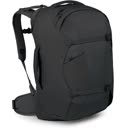 Osprey Farpoint 40L |
The carry-on travel pack the rest get measured against: 40 L, full clamshell opening, a 16-inch laptop sleeve, and a harness that zips away when you check it. | Amazon |
| Best large backpack | 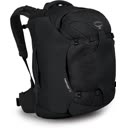 Osprey Farpoint 55 (detachable daypack) |
For trips where the carry-on stops being enough: 55 L in total, with a 15 L daypack that detaches so the main pack goes overhead and the daypack becomes your personal item. Check your airline’s limits first. | Amazon |
| Best packable day pack | 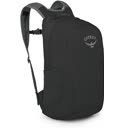 Osprey Ultralight Collapsible Stuff Pack (18 L) |
Four ounces, stuffs into its own pocket, and becomes a real day pack for the summit day you did not want to carry a full bag for. | Amazon |
| Best packable tote | 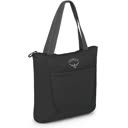 Osprey Ultralight Collapsible Stuff Tote |
Same trick in tote form: folds flat, takes the market haul or the beach day, and disappears into a pocket afterwards. | Amazon |
| Best camera backpack | 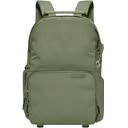 Brevite Jumper 18 L |
Dividers you can rearrange around a body plus two lenses, a 16-inch laptop sleeve, and carry-on dimensions that still look like a normal daypack. | Amazon |
| Charging | |||
| Best large power bank | 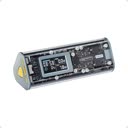 Sharge 170 (24,000 mAh) |
86.4 Wh keeps the Sharge 170 under the 100 Wh carry-on limit, and 140 W PD3.1 out is enough to refill a laptop and still take two phones. The screen shows live draw and time left. | Amazon |
| Best cable | 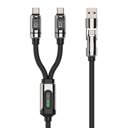 MFish 2-in-1 USB-C to USB-C, 140 W |
Two connectors on one cable with an inline wattage display, so you can see whether a socket is actually charging at full speed. | Amazon |
| Best mobile charger | 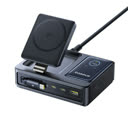 Baseus Nomos 5-in-1 charging station, 140 W |
One brick replaces the laptop charger, phone charger and watch cable: Qi2 15 W wireless, USB-C PD, and a retractable 100 W cable. | Macy’s |
| Audio | |||
| Best in-ear headphones | 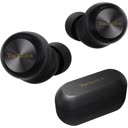 Technics EAH-AZ100 |
Reference-class tuning with adaptive noise cancelling, three-device multipoint, and about 10 hours per charge with ANC on — the pair for long transit days and calls. | Amazon |
| Best over-ear headphones | 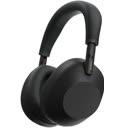 Sony WH-1000XM6 |
The flight pair: the strongest noise cancelling Sony has shipped, 30-hour battery, folds into its case, and multipoint so laptop and phone stay connected at once. | Amazon |
| Other | |||
| Best travel sunglasses | 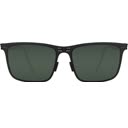 ROAV Echo folding sunglasses |
The folding frame is the point: a screwless micro hinge takes them down to pocket size, so they live in a jacket rather than a case at the bottom of the daypack. G15 lenses, Rx compatible. | Amazon |
| Best travel personal screen | 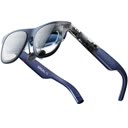 XREAL 1S AR glasses |
A private big screen that folds into a glasses case: 500-inch virtual display, X1 chip, native 3DoF tracking. Plug into a laptop, phone or handheld on a long flight. | Amazon |
Before you book
Six checks that catch most expensive mistakes, roughly in the order they are worth doing.
- Passport and visa. Check validity rules for every country on the route, not just the first — several require months of validity beyond your return date. Apply on official government sites, never through a paid third-party form.
- Entry requirements. Rules change with little notice. Confirm on the destination's own government site, then cross-check your own government's advisory.
- Travel insurance. Buy it when you book, not when you fly: cancellation cover is what you are paying for early. Check that hiking, altitude and scooter riding are actually included.
- Timed tickets. Every one of the seven wonders caps daily numbers in some form. Book through the official seller and make sure the name on the booking matches the ID you will carry.
- Season and weather. Shoulder season is usually the honest sweet spot: fewer crowds than peak, better prices, weather you can still plan around.
- One buffer day. Flights, altitude and weather slip. A spare day mid-itinerary costs less than rebooking a connection.