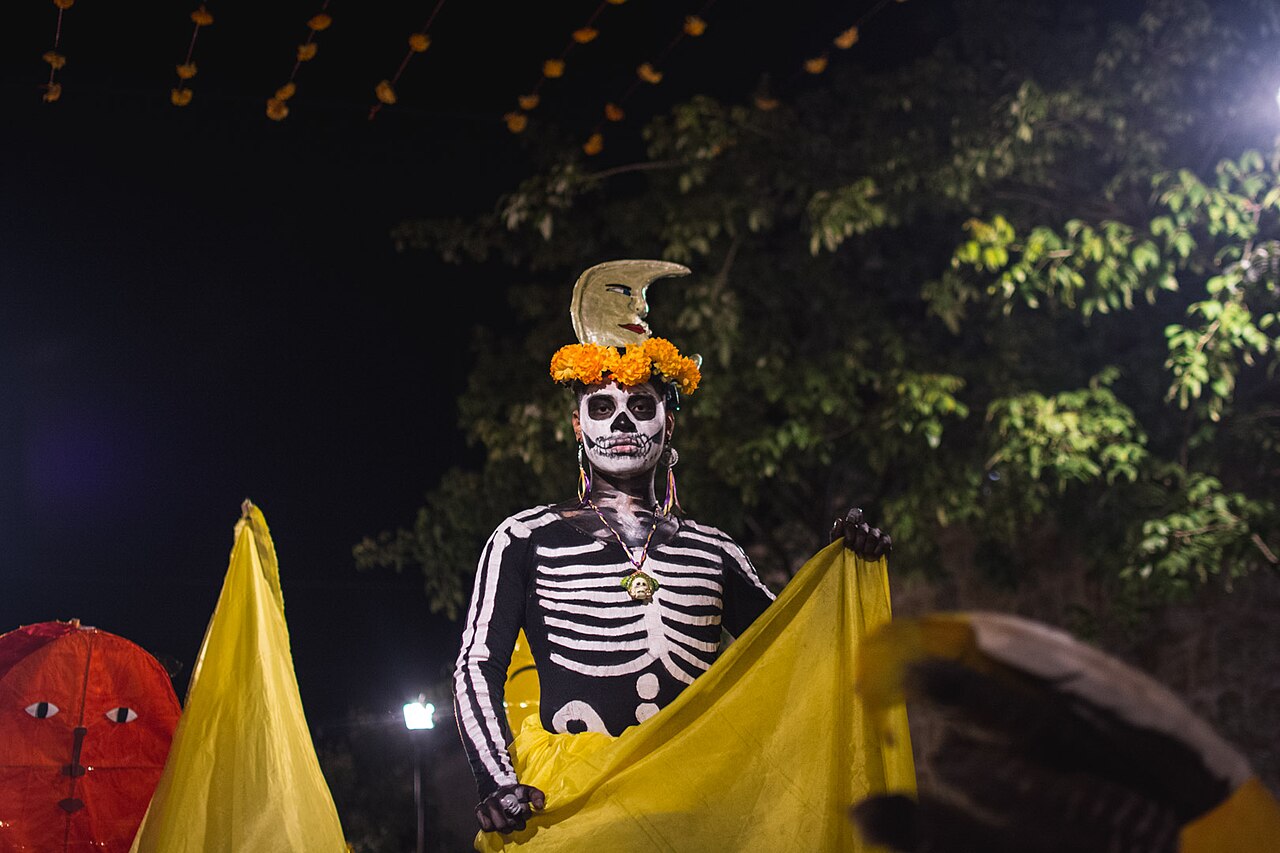
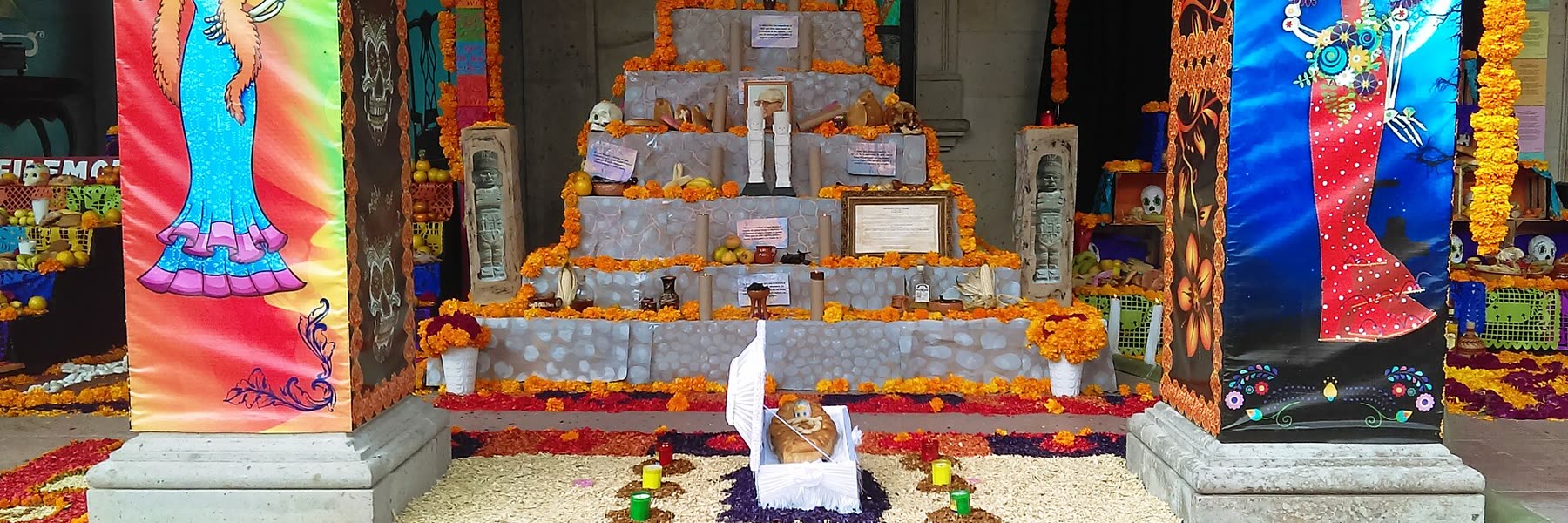
Día de Muertos is a family and community observance on 1–2 November, with altars, cemetery vigils and processions rather than one central show. Oaxaca's state tourism authority published the 2026 Convite and programme; no 2027 schedule exists yet, so the date is customary and the programme is not announced.
LocationOaxaca, Mexico
Edition timingCustomary 1–2 November · 2026 programme published; 2027 not announced
AccessFree public observance; some events ticketed separately
Timing: Customary 1–2 November · 2026 programme published; 2027 not announced
Venue or host area: Oaxaca de Juárez: the historic centre, markets and city cemeteries, with the Convite procession traditionally forming near the Fuente de las Ocho Regiones. Observances vary by neighbourhood and by village across the state, so a single venue describes only part of the event.
Access: Processions, markets, altars in public buildings and cemetery visits are open and generally free. Museums, concerts, guided tours and some cemetery arrangements are sold separately by their organisers. No city-wide ticket exists and no 2027 price or inventory was verified.
02 · Plan the visit
Plan around the official access route
Oaxaca's 2026 programme described the Convite on the evening of 1 November, with the route running through the centre; Mexico City's Cuauhtémoc borough ran a separate 27 October–2 November programme, which is context for how these observances are organised, not an Oaxaca schedule. Cemetery visiting hours, ticketing for individual events and 2027 road closures were not published. Crowds build after dark in the centre and at the main cemeteries, so agree a meeting point and a way back before the evening processions start.
Confirm the edition: use the organiser’s latest date and venue announcement, not only a customary month.
Confirm admission: check whether access is by purchase, ballot, qualification, application or free/public entry; do not assume a ticket includes every venue or session.
Confirm local logistics: check current transport, accessibility, road closures and arrival instructions with the organiser and relevant local authority.
Protect flexibility: compare cancellation terms before booking travel around a date or route that is not fully confirmed.
03 · Location
Getting to Oaxaca de Juárez
A highland city in southern Mexico, laid out in a colonial grid around a wide zócalo, with the archaeological sites of Monte Albán on the ridge above.
The airports serving Oaxaca de Juárez and its region:
Oaxaca International AirportOAX
Connections, terminals and transfer arrangements change — confirm them with the airline and the organiser rather than planning around a fixed transfer time.
The venue
Oaxaca de Juárez: the historic centre, markets and city cemeteries, with the Convite procession traditionally forming near the Fuente de las Ocho Regiones. Observances vary by neighbourhood and by village across the state, so a single venue describes only part of the event.
The catalogue marker shows Oaxaca, Mexico at city or region level only — it is not an entrance, a gate, a course or a transfer route. For the event’s position among its category peers, open the Culture & faith overview and map.
04 · Overview
What this event is
A Mexican observance on 1–2 November, when families build altars for deceased relatives, visit cemeteries and hold vigils through the night. An ofrenda carries photographs, food, drink, marigolds, candles and papel picado; in towns across Michoacán, Oaxaca and Mexico City the cemeteries fill with families and the streets with processions.
Día de Muertos is the best-known expression of a distinct Mexican relationship with death: the ofrenda, the marigolds, the sugar skulls and the overnight cemetery vigils are ritual rather than performance, and they are family occasions rather than public shows. UNESCO inscribed it on the Representative List of Intangible Cultural Heritage in 2008, and it has become one of the country's biggest tourism weeks.
History
The observance combines Mesoamerican rituals honouring the dead with Catholic All Saints' and All Souls' days, a fusion that formed during the colonial period and absorbed the pre-Hispanic month of Miccailhuitontli. It has been held continuously in rural communities, and the 2015 James Bond film's opening sequence turned Mexico City's parade into an international spectacle — a parade the city then made annual from 2016.
Day of the Dead at a glance
Dates
1–2 November
Heritage
UNESCO intangible heritage, 2008
Core
Ofrendas, cemetery vigils, family meals
Country
Mexico
Peak regions
Michoacán, Oaxaca, Mexico City
05 · Research & credits
Sources and photo credit
Evidence and event information reviewed 2026-10-31. Published edition facts are separated from typical timing and historical context.
What we could not verify
No 2027 Oaxaca programme, Convite route or cemetery visiting hours were published at review.
Accessible viewing areas, street closures and late-night transport for 2027 were not verified.
The Mexico City borough programme used here as context is not an Oaxaca schedule and must not be read as one.