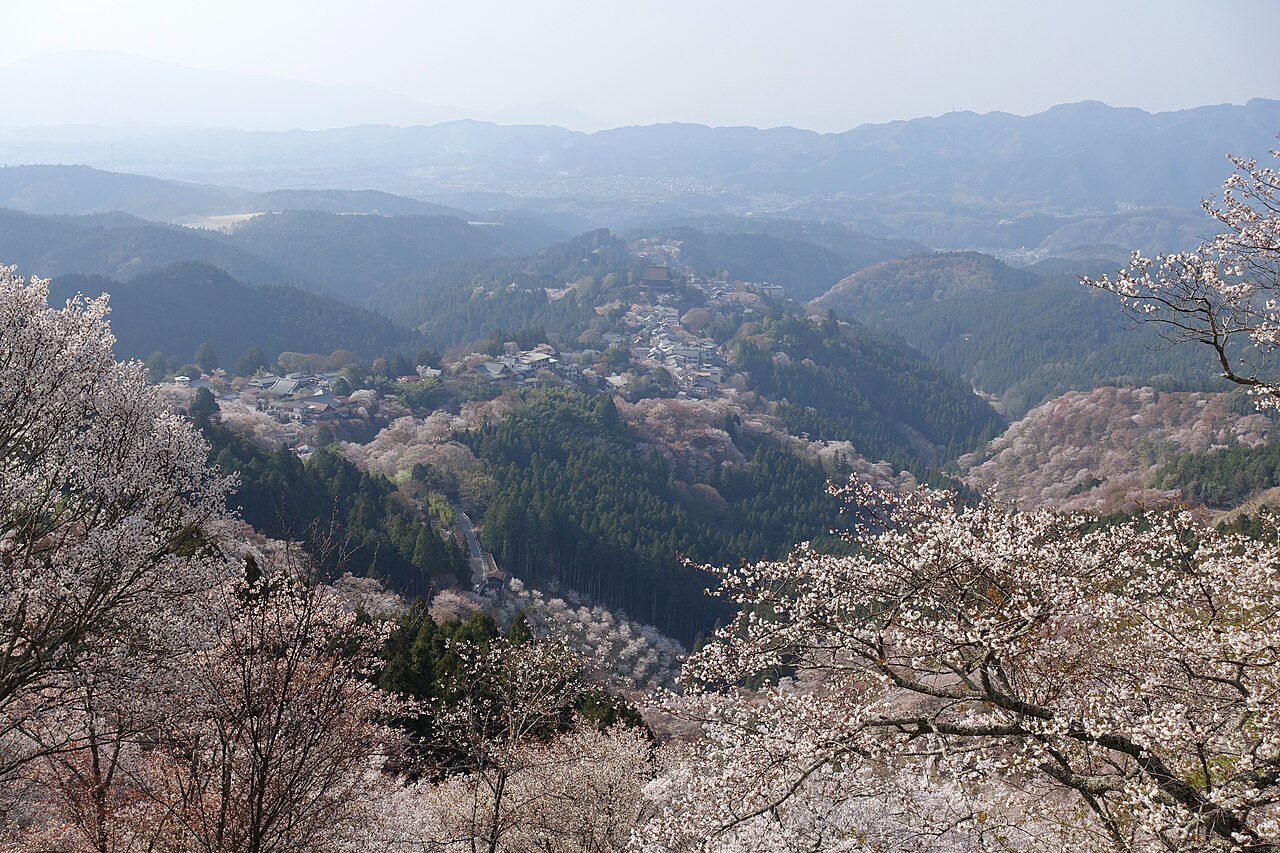
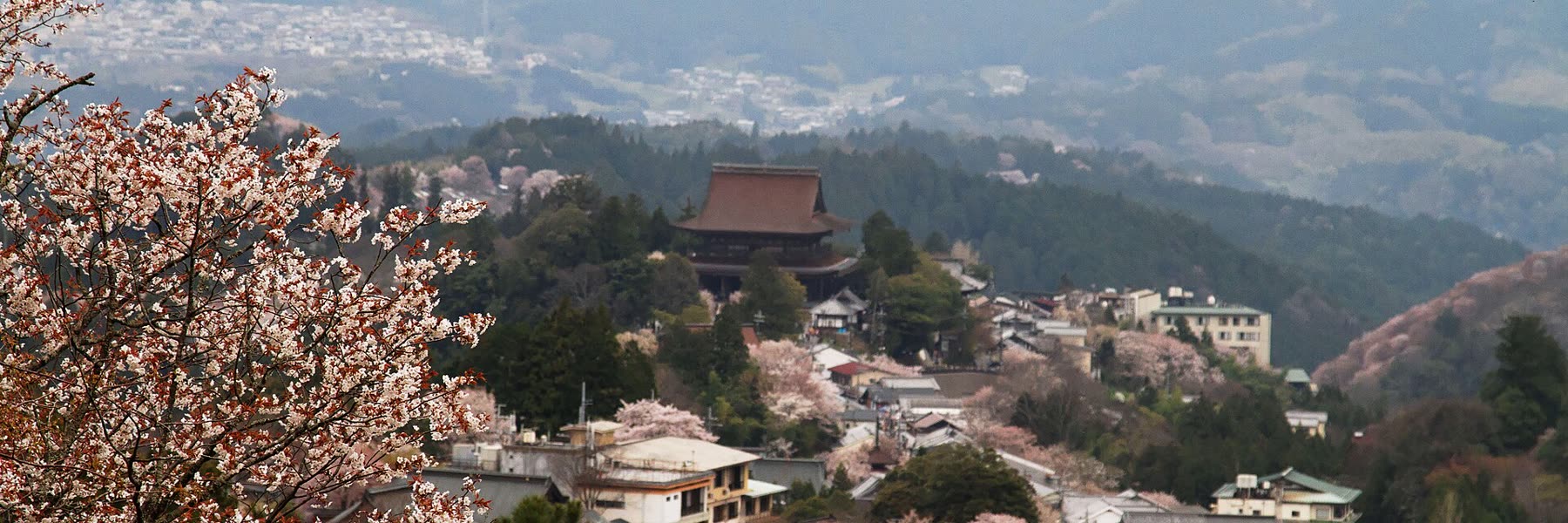
Yoshino-yama is a mountain of blossom rather than a single ticketed festival, with the slopes read in four bands from Shimo-Senbon up to Oku-Senbon. Nara's tourism authority describes the usual viewing period as early to late April; seasonal lighting and dates are set locally each year.
LocationYoshino, Japan
Edition timingEarly–late April viewing window · no fixed 2027 festival date
AccessFree to walk; ropeway and some parking charged
Timing: Early–late April viewing window · no fixed 2027 festival date
Venue or host area: Yoshino-yama in Nara Prefecture, read in four bands — Shimo-Senbon, Naka-Senbon, Kami-Senbon and Oku-Senbon — each blooming a few days apart as you climb.
Access: Walking the slopes is free. The ropeway, some car parks and certain temple gardens charge separately, and seasonal bus fares are set locally each year. No 2027 festival ticket or reservation was published.
02 · Plan the visit
Plan around the official access route
Kintetsu Yoshino station is the gateway, with a ropeway up to Yoshino-yama station and roughly a twenty-minute uphill walk to Shimo-Senbon. Seasonal buses run on changing routes as the blossom front moves, and the local association advises checking the year's timetable rather than assuming last year's. This is a mountain-wide season rather than one fixed festival, so there is no central ticket.
Confirm the edition: use the organiser’s latest date and venue announcement, not only a customary month.
Confirm admission: check whether access is by purchase, ballot, qualification, application or free/public entry; do not assume a ticket includes every venue or session.
Confirm local logistics: check current transport, accessibility, road closures and arrival instructions with the organiser and relevant local authority.
Protect flexibility: compare cancellation terms before booking travel around a date or route that is not fully confirmed.
03 · Location
Getting to Yoshino
A mountain town in Nara Prefecture whose slopes are divided into four blossom bands, connected by the Kintetsu line and a ropeway rather than by car parks.
Connections, terminals and transfer arrangements change — confirm them with the airline and the organiser rather than planning around a fixed transfer time.
The venue
Yoshino-yama in Nara Prefecture, read in four bands — Shimo-Senbon, Naka-Senbon, Kami-Senbon and Oku-Senbon — each blooming a few days apart as you climb.
The catalogue marker shows Yoshino, Japan at city or region level only — it is not an entrance, a gate, a course or a transfer route. For the event’s position among its category peers, open the Cherry blossom overview and map.
04 · Overview
What this event is
A mountain in Nara Prefecture covered in tens of thousands of cherry trees, viewed in four ascending bands — the lower slopes, the middle, the upper and the summit — that flower in sequence over roughly three weeks. The village of Yoshino sits at the base, with temples and shrines along the route up, and the mountain is a pilgrimage site as much as a viewing spot.
Yoshino-yama is the most celebrated blossom site in Japan and the reason the country's cherry trees are planted in bands: the different altitudes flower one after another, so the mountain shows a moving front of colour rather than a single week of bloom. It has been written about since the Heian period and remains the reference point against which other hanami sites are measured.
History
Yoshino's blossom has been celebrated in Japanese poetry since the Heian period, and the mountain's planting was formalised in the Edo period by a merchant-farmer who propagated trees across the slopes. The area is part of the UNESCO World Heritage site covering the sacred sites and pilgrimage routes of the Kii Mountain Range, inscribed in 2004.
Yoshino cherry blossom at a glance
Location
Yoshino, Nara Prefecture
Trees
Tens of thousands across four flowering bands
Typical window
Early to late April
Heritage
Kii Mountain Range World Heritage site
Access
Train to Yoshino, then walking routes
05 · Research & credits
Sources and photo credit
Evidence and event information reviewed 2026-10-31. Published edition facts are separated from typical timing and historical context.
What we could not verify
No fixed 2027 festival dates exist; the viewing period is described as early to late April and depends on the bloom.
Seasonal bus routes, timetables and ropeway hours for 2027 were not published.
Night-lighting dates and any paid viewing areas for 2027 were not confirmed.